The Greatest Discovery We Didn't Make
Computer science is amazing. Maybe the most amazing thing humans ever did.
But here's the thing — we didn't invent it. We discovered it.
The wheel? We invented that. Fire? We harnessed it. But computation? It was already there. Running in nature long before we showed up.
Nature has been running on binary for 3.5 billion years. We just finally learned how to read it.
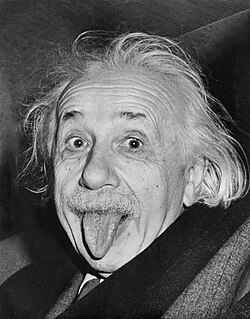
"The More I Study in Science, the More I Believe in God"
Einstein said this. And the more I study code, the more I get it.
Not the old man in the sky. But the order underneath everything. The fact that the universe has rules. That you can write down a formula and it actually works. That reality isn't random chaos — it runs on something.
When I write code, I feel like I'm reading someone else's blueprint. Like the universe is a system, and computer science is just our way of understanding how it works.
Where Did Binary Come From?
Let's go back. Way back.
Billions of years ago, a single cell learned how to copy itself. That's all. One simple choice: split or don't split. 1 or 0.
That one bit started everything.
| Life's Binary | CS Binary |
|---|---|
| Cell divides or doesn't | 1 or 0 |
| Neuron fires or doesn't | 1 or 0 |
| Survive or die | 1 or 0 |
| Pass on genes or not | 1 or 0 |
From that first single bit, evolution built everything — trees, whales, Beethoven, your phone, this blog post.
Computer science didn't invent binary. Binary invented us. We just finally noticed.
How Rare Are We?
Here's something wild.
There are about 36.5 million professional software developers in the world. That's roughly 1% of the global labor force. Not that rare.
But if you zoom in to the people actually pushing computer science and AI forward — researchers, ML engineers, the ones building the frontier — the number drops to roughly 500,000 to 800,000 people worldwide.
That's 0.006% of the global population. One person in every 16,000.
Compare that to Buddhist monks. There are about 1.2 million monks and nuns in the world — one in every 6,800 people.
You are more likely to meet a Buddhist monk than someone building the future of AI and CS.
Think about that. The people shaping the most transformative technology in human history are rarer than monks. And yet the world depends on them — more every single day.
So What Makes Us Special?
If everything runs on computation — cells, evolution, maybe even the whole universe — then what's so special about humans?
An AI can process data better than us. A calculator can do math faster. A model can write a poem.
So what do we have that they don't?
A heart.
The Intelligence We Forget About
We talk a lot about IQ. About brain power. About who can code the fastest or solve the hardest algorithm.
But there's another intelligence. One we don't measure enough.
Heart intelligence.
It's the ability to:
- Love someone without a reason
- Feel music in your chest, not just analyze its structure
- Care about a stranger's pain
- Sacrifice something for someone else
- Know something is wrong even when the numbers say it's right
- Forgive when logic says don't
A machine can simulate all of these. But it can't feel them.
This is our privilege. Not our brain — our heart.
We are the only system in the known universe that can compute and care. That can process information and feel what it means.
"Why the Future Need Us?"
The AI boom is just the beginning. What's coming is bigger.
- Robotics — machines that move through our world, work alongside us, care for the elderly
- Gene programming — rewriting the code of life itself, curing diseases before they start
- Bioengineering — growing organs, designing new life forms, reversing environmental damage
These revolutions are coming. And they will need people who can build them.
But more importantly, they will need people who can decide what should be built.
The future doesn't just need more intelligence. It needs heart intelligence — people who can ask the hard questions:
- Just because we can edit genes, should we?
- Just because we can build autonomous weapons, should we?
- Just because we can optimize everything, should we?
Data without love is empty. Technology without compassion is dangerous.
What This Means for You
The future of this industry might not need me. It might not need your boss, or your professor, or the CEO of the biggest tech company.
But it will always need you.
The ones who put humanity's development as their mission. The ones who code not for stock options but because they believe the world can be better. The ones who see technology as a tool for compassion, not just efficiency.
Don't try to beat the machine at its own game. You will lose.
Instead, bring what the machine can't bring:
- Build things you care about, not things that optimize
- Write code for people, not for metrics
- Say no to what works but hurts
- Love what you do — and let that love guide your choices
The future doesn't need more processing power. It needs more heart.
So let me ask you something.
Are you proud of the code you're writing?
"We are not the final step. We are the step that can choose to care. That's why the future needs us."